Top 10 Biologic Drug Production Companies Worldwide
Biologic Drug Production has moved from specialized laboratory work into a global manufacturing discipline. Today, leading companies operate large facilities filled with stainless-steel bioreactors, single-use bags, purification columns, and tightly monitored cleanrooms. Their products include monoclonal antibodies, vaccines, recombinant proteins, and advanced cell therapies.
“Biological products are generally more complex than chemically synthesized drugs, and manufacturing changes can affect their quality.” — Dr. Janet Woodcock, former Director of the U.S. FDA’s Center for Drug Evaluation and Research.
That observation explains why this industry deserves careful evaluation. A company’s reputation alone cannot prove manufacturing excellence. Reliable assessment requires evidence from regulatory records, production capacity, quality systems, clinical experience, and supply performance. It also requires attention to less visible details, such as batch consistency, cold-chain handling, process validation, and the ability to scale without weakening quality controls.
This Top 10 list examines major Biologic Drug Production companies worldwide through those practical measures. Some organizations lead in commercial scale. Others stand out for platform technology, contract manufacturing, or expertise in complex therapies. The ranking is not absolute. Different readers may value innovation, affordability, regional access, or manufacturing resilience more heavily.
That is a limitation.
Public information can also be incomplete, outdated, or shaped by corporate reporting. Therefore, this overview should support informed research, not replace regulatory documents, technical audits, or professional judgment. The strongest manufacturers are not merely large. They are consistent, transparent, and capable of protecting patients at every production stage.
Definition and Role of Biologic Drug Production Companies
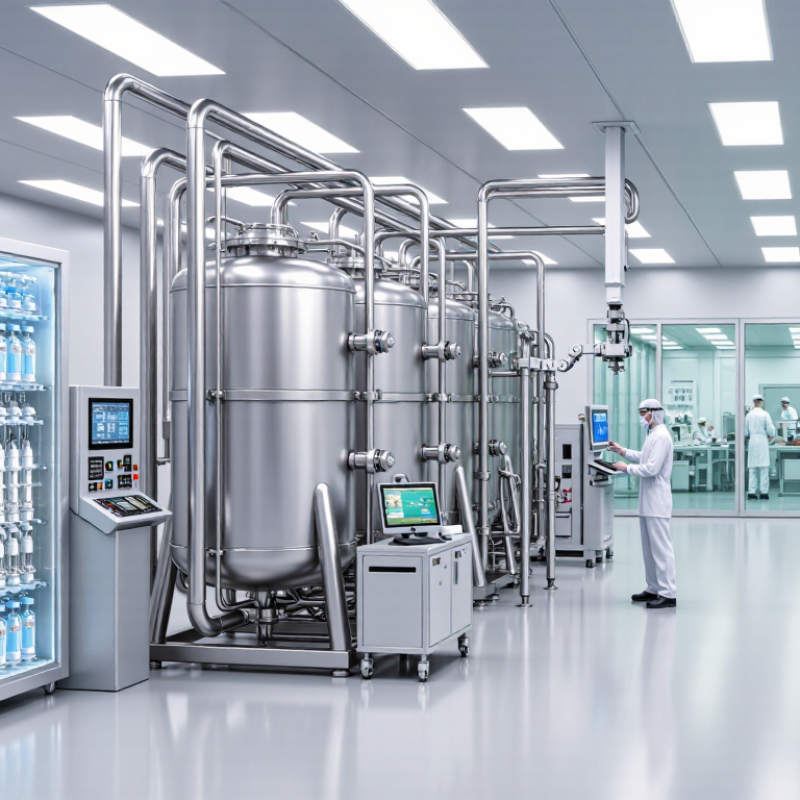
Biologic drug production companies develop and manufacture medicines made from living cells, proteins, or other biological materials. Their role extends beyond operating large stainless-steel bioreactors. Teams design cell lines, control nutrient feeds, remove impurities, and test each batch for identity, strength, purity, and safety. A single deviation in temperature or pH can affect thousands of sterile vials.
According to the IQVIA Institute’s Global Use of Medicines 2024 report, worldwide medicine spending may reach approximately $2.3 trillion by 2028. Innovative therapies, including biologics, are expected to drive much of this growth. Production companies therefore provide specialized capacity when developers lack suitable facilities, equipment, or technical personnel. Their work commonly includes upstream processing, downstream purification, aseptic filling, packaging, and refrigerated distribution.
Quality systems make the difference. The International Society for Pharmaceutical Engineering highlights process control, contamination prevention, and data integrity as central manufacturing priorities. In practice, operators may monitor a 2,000-liter culture continuously, then move the purified product through multiple filtration stages. Cold-chain handling often requires tightly controlled storage, commonly between 2°C and 8°C. Some products need frozen or ultra-cold conditions.
The model is not flawless. Capacity shortages, complex supply chains, and difficult scale-up can still delay delivery. Smaller production changes may also produce unexpected biological results. That uncertainty deserves more attention. The strongest companies combine validated technology with experienced scientists, transparent documentation, and disciplined regulatory communication. Their real value is dependable execution, not simply factory size.
Key Technologies Used in Biologic Drug Manufacturing
Top 10 Biologic Drug Production Companies Worldwide
Key Technologies Used in Biologic Drug Manufacturing
Biologic drug manufacturing depends on living cells, precise controls, and highly trained personnel. Unlike small-molecule production, each batch can respond differently to minor environmental changes. Manufacturing teams monitor temperature, acidity, dissolved oxygen, and nutrient levels throughout cell culture. Stainless-steel bioreactors support large volumes, while single-use systems can reduce cleaning demands and cross-contamination risks.
Cell lines are selected for stable growth and consistent protein expression. Perfusion technology continuously removes waste while retaining productive cells. It can improve output, but it also increases process complexity. Process analytical technology uses sensors and laboratory testing to detect changes early. Useful data must be accurate, timely, and connected to clear decisions.
Downstream purification commonly combines depth filtration, chromatography, and viral clearance steps. These methods remove impurities while protecting the target molecule’s structure. Automated control systems help maintain repeatable operating conditions. However, automation is not a substitute for judgment. A clean dashboard can still hide weak sampling or poor data interpretation. Quality specialists review batch records, investigate deviations, and confirm that equipment performs as intended. Small temperature shifts may affect product quality. That lesson remains easy to overlook.
Criteria for Comparing Leading Global Producers
Comparing global biologic producers requires more than counting marketed products.
The practical test starts with manufacturing depth, inspection history, and supply resilience. The IQVIA Institute’s Global Trends in R&D 2024 counted more than 6,100 clinical-stage assets worldwide in 2023. That pipeline increases demand for flexible mammalian-cell, microbial, and viral-vector capacity. A serious comparison should separate installed capacity from usable capacity. A full bioreactor is not automatically reliable.
Quality should carry measurable weight.
Review inspection outcomes, warning letters, batch-release controls, deviation rates, and corrective-action timelines. FDA and EMA guidance emphasizes validated processes, contamination control, data integrity, and lifecycle oversight. Public quality signals matter because production failures can interrupt treatment, not merely delay revenue. Compare serialization, cold-chain monitoring, and redundancy across sites. Look for qualified suppliers and documented recovery plans.
Cost comparisons need similar discipline.
Report revenue per employee, yield, utilization, capital spending, and lead times separately. The WHO Global Vaccine Market Report 2024 found that ten manufacturers supplied about 70% of vaccine doses in 2023, excluding COVID-19 products. That concentration makes geographic redundancy a useful scoring factor. Evaluate local fill-finish options, technology-transfer records, and access to trained operators. No ranking is perfect. Public disclosures can be selective, while smaller producers may publish less but perform consistently. Score evidence quality itself, not just headline capacity.
Top Biologic Drug Production Companies Worldwide
The top biologic drug production companies worldwide operate complex facilities built for precision, traceability, and patient safety. The leading ten typically produce antibodies, vaccines, recombinant proteins, and advanced cell-based therapies. Their sites often include stainless-steel bioreactors, single-use systems, and temperature-controlled storage areas.
Quality begins long before commercial manufacturing. Experienced teams monitor cell growth, contamination risks, purification efficiency, and batch consistency. Automated sensors record pH, oxygen, pressure, and temperature throughout production. Independent testing then checks identity, strength, purity, and stability. These controls support reliable supply across hospitals and research networks.
Global producers also invest heavily in specialized workforce training. Engineers, microbiologists, validation experts, and quality professionals must coordinate closely. A minor documentation error can delay an entire batch. That reality matters. Production scale alone does not prove excellence, because biologic medicines remain sensitive to small process changes.
The strongest companies maintain facilities across major biotechnology regions, including North America, Europe, and Asia-Pacific. They use validated cold chains and detailed shipment records for temperature-sensitive products. Regulatory inspections provide important external scrutiny, although compliance does not remove every operational weakness. Supply interruptions, raw-material shortages, and limited manufacturing capacity still affect global access. Performance should therefore be judged through quality records, manufacturing resilience, technical capability, and transparent oversight.
Industry Trends and Future Manufacturing Developments
Top 10 Biologic Drug Production Companies Worldwide
Biologic manufacturing is moving from large, centralized plants toward flexible and regional production networks. The leading producers are investing in single-use systems, automated monitoring, and modular cleanrooms. These tools can shorten changeover times and reduce water consumption.
Continuous processing is gaining attention, especially for vaccines, antibodies, and cell-based therapies. Real-time sensors can track temperature, pressure, and contamination risks during production. Digital models may also predict equipment failure before a batch is affected. However, no forecast is perfect. Data quality still depends on careful sampling and trained operators.
Tips: Evaluate a facility’s process control, workforce expertise, and supply resilience. Check how it manages cold-chain storage, raw-material shortages, and technology transfers. A modern plant should show clear records, validated procedures, and reliable deviation handling. Small manufacturing errors can create expensive delays. Sustainability is also becoming practical, not decorative; lower-energy refrigeration and recyclable materials may improve long-term performance. The next decade will likely reward producers that combine advanced automation with human judgment.