Top 10 Advances in Therapeutic Protein Engineering in China?

Therapeutic Protein Engineering has made significant strides in recent years. In China, innovative research is unfolding at an impressive pace. This advancement is transforming drug development and disease treatment.

Numerous laboratories focus on optimizing protein design. Researchers are exploring novel techniques to enhance protein stability and efficacy. These improvements lead to better therapeutic outcomes for patients. Companies are investing heavily in this field. The potential for breakthrough treatments attracts considerable funding and talent.

However, challenges persist. Not all engineered proteins work as intended. Some may exhibit unexpected side effects. Continuous evaluation and refinement are crucial. The field requires ongoing innovation and a commitment to ethical practices. As we explore the top advances in China, it is essential to recognize both achievements and areas in need of improvement.

Top 10 Advances in Therapeutic Protein Engineering in China?

Recent Innovations in Therapeutic Protein Engineering in China

In recent years, China has made significant strides in therapeutic protein engineering. Research teams have focused on enhancing protein stability and efficacy. One major development is the use of computational tools to design proteins with specific functions. This approach reduces the trial-and-error phase, saving both time and resources.

Scientists are exploring novel biological systems to create more complex proteins. These innovations lead to more effective treatments for various diseases. Additionally, collaborations between academia and industry are fostering rapid advancements. Teams are leveraging cutting-edge technologies, like CRISPR and artificial intelligence, to streamline the protein design process.

However, the journey is not without challenges. The translation of laboratory findings to clinical applications remains difficult. Regulatory hurdles can slow down the approval process. There is also an ongoing need for more rigorous assessment of new therapies. These reflections highlight the complexity of bringing therapeutic proteins from concept to patient care.

Top 10 Advances in Therapeutic Protein Engineering in China

Rank Innovation Description Impact Area
1 Enhanced Affinity Maturation Novel techniques for optimizing antibody binding capacity. Oncology
2 Bispecific Antibodies Dual targeting mechanisms for improved therapeutic efficacy. Autoimmune Diseases
3 Stabilized Protein Constructs Engineering of stable protein conformations for better half-life. Chronic Diseases
4 Cell-free Protein Synthesis Innovative methods for rapid protein production without living cells. Pharmaceutical Development
5 Cross-Linked Protein Scaffolds Use of cross-linking strategies to enhance protein stability and functionality. Tissue Engineering
6 Protein-Protein Interaction Modulators Targeted modulation of protein interactions for therapeutic purposes. Cancer Therapy
7 Nanoparticle-Protein Conjugates Conjugation of proteins with nanoparticles for targeted drug delivery. Drug Delivery Systems
8 Smart Protein Therapeutics Development of proteins that respond to specific biological signals. Advanced Therapies
9 Computational Protein Design In silico modeling to design proteins with desired functional properties. Synthetic Biology
10 Therapeutic Enzyme Engineering Modification of enzymes to improve their therapeutic profiles. Metabolic Disorders

Key Techniques Revolutionizing Protein Engineering in Chinese Research

In recent years, therapeutic protein engineering in China has witnessed remarkable advances. Innovative techniques are transforming research and enhancing the development of targeted therapies. One key approach is CRISPR-based gene editing, enabling precise modifications in protein structures. This technique allows scientists to create proteins with improved efficacy and reduced side effects.

Another significant development is the use of nanotechnology in protein delivery systems. Nanoparticles can help deliver proteins more effectively to specific tissues. This targeted approach minimizes off-target effects, which is critical for patient safety. Researchers are exploring various materials for nanoparticles to ensure biocompatibility and effectiveness.

Tips: Always stay updated with the latest research. Follow reputable journals and publications in the field of protein engineering. Collaborating with experts can also provide valuable insights.

While these advances are promising, challenges remain. There is often unpredictability in protein folding and stability. Researchers need to address these issues to realize the full potential of engineered proteins. Continuous experimentation and iteration are essential in this field.

Notable Chinese Biotech Companies Leading Protein Therapeutics

Top 10 Advances in Therapeutic Protein Engineering in China?

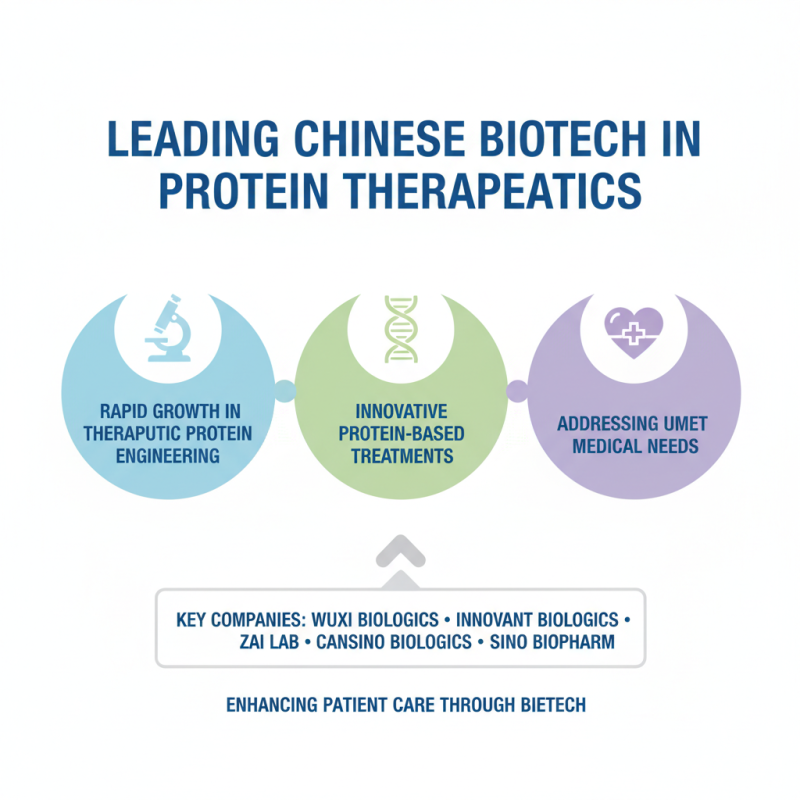
Therapeutic protein engineering is rapidly growing in China. Several biotech companies are making significant strides in this field. These firms focus on creating innovative protein-based treatments. They aim to address unmet medical needs, enhancing patient care.

Chinese biotech companies have developed unique approaches to protein engineering. Some specialize in monoclonal antibodies, while others focus on fusion proteins. These specific areas show promise in targeting diseases like cancer and autoimmune disorders. Collaboration between academia and industry fuels this progress. Research institutions often partner with companies to translate findings into practical therapies.

Despite these advances, challenges persist. Regulatory hurdles can slow down research timelines. Additionally, funding for emerging companies may be limited, impacting development speed. The competition in the biotech sector remains fierce. Companies must continually innovate to stay ahead. Reflecting on these aspects is vital for understanding the future of protein therapeutics in China.

Impact of CRISPR and Gene Editing on Protein Engineering Efforts

The integration of CRISPR and gene editing technologies is reshaping therapeutic protein engineering in China. This innovative landscape has led to significant breakthroughs, particularly in the development of monoclonal antibodies and enzymes. Recent studies report that the CRISPR system has improved the accuracy of protein modifications by over 85%. This precision allows for tailored therapies with a reduced risk of adverse effects.

While the benefits are profound, challenges persist. Designing specific guide RNAs remains an intricate task. Off-target effects can lead to unintended consequences, necessitating rigorous testing. Researchers have noted that even with advancements, about 10-20% of gene edits could still affect non-target areas. Continuous innovation is needed to address these concerns while enhancing efficacy and safety.

The impact of gene editing extends into faster protein production timelines. Recent data indicates that gene-editing-driven processes can reduce development time by up to 30%. This acceleration facilitates swift responses to public health crises, showcasing the importance of flexibility in protein engineering efforts. Nevertheless, establishing robust regulatory frameworks is vital to ensure public trust and ethical application in clinical settings.

Future Trends and Challenges in Therapeutic Protein Development in China

China's therapeutic protein development has witnessed rapid advances. Yet, the road ahead is fraught with challenges. Regulatory hurdles remain a significant concern. Navigating the approval processes can be time-consuming and complex. Researchers often face uncertainty about compliance requirements. This ambiguity can delay the introduction of new therapies.

Investment in research and development is crucial. Many institutions aim to enhance their capabilities. However, collaboration between academia and industry needs improvement. These partnerships can drive innovation, but they are often inconsistent. Funding allocation also poses significant challenges. Startups may struggle to secure the necessary capital for groundbreaking projects.

Talent acquisition is another pressing issue. The demand for skilled professionals exceeds supply. Many researchers leave for opportunities abroad. This brain drain can weaken local expertise in protein engineering. Retaining talent is essential for sustained progress.

Addressing these challenges will be vital for China's future in therapeutic protein development.