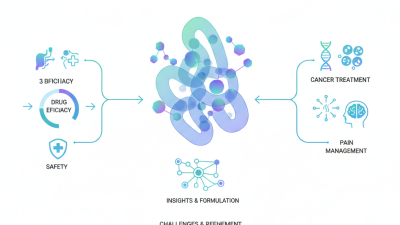
The 2026 Best Biologic Drug Production Suppliers will not be defined by factory size alone. Reliable selection requires evidence across science, quality, capacity, and long-term execution. This review examines suppliers that support cell-line development, upstream processing, downstream purification, sterile filling, analytical testing, and commercial-scale manufacturing. It also considers GMP readiness, technology transfer, supply continuity, and experience with complex biologics.
Dr. Scott Gottlieb, former FDA Commissioner, stated, “Biosimilars can help increase access to biologic therapies and potentially lower health care costs.” His observation highlights an important production reality. Efficient manufacturing must support both product quality and patient access. Strong suppliers therefore need more than modern stainless-steel vessels. They need validated processes, skilled teams, dependable data systems, and transparent deviation management.
Details matter.
A supplier may advertise flexible capacity, yet practical availability can differ by region, product format, and campaign schedule. This comparison will examine those gaps carefully. It will review manufacturing experience, regulatory inspection history, facility design, single-use technology, quality-control depth, and customer support. Pricing will be considered, but it will not dominate the assessment. The lowest quotation can create hidden costs through delays, rework, or failed technology transfer.
Some rankings remain imperfect. Public supplier information is often selective. Not every performance metric is disclosed. Readers should verify current certifications, inspection outcomes, and contractual terms before making a decision. This guide offers a structured starting point for evaluating Biologic Drug Production partners in 2026, not a substitute for technical due diligence.

2026 Best Biologic Drug Production Suppliers?
Choosing a biologic production supplier begins with classification, not advertising. WHO’s product framework separates biological medicines by source, production method, and therapeutic purpose. Relevant categories include vaccines, blood-derived products, recombinant proteins, monoclonal antibodies, allergenic products, cell-based medicines, and gene therapy products. Each category creates different manufacturing risks.
A recombinant protein facility may require stainless-steel bioreactors, chromatography columns, and strict host-cell protein testing. A cell-based product needs controlled cryogenic storage, chain-of-identity checks, and shorter release timelines. These details change supplier suitability. WHO guidance on biotherapeutic products also emphasizes quality, safety, efficacy, and comparability throughout development and manufacture.
Market data supports this careful approach. IQVIA Institute’s Global Use of Medicines 2024 report projects worldwide medicine spending will approach 2.3 trillion US dollars by 2028. Biologic medicines remain a major contributor to spending growth, particularly in oncology, immunology, and rare diseases. The 2024 Global Biopharmaceutical Manufacturing Capacity report from BioPlan Associates also highlights continuing pressure on capacity, skilled labor, and single-use technology adoption.
Capacity alone is not enough. Review validated processes, contamination controls, analytical depth, cold-chain performance, and inspection history. Ask how deviations are investigated, not only how many batches were delivered. That question matters.
A supplier can look excellent on paper and still fail a technology-transfer test. This is where many evaluations become too optimistic. WHO classification helps narrow the field, but it cannot replace facility audits, technical trials, and evidence from comparable products.
Defining biologic product categories with a WHO-aligned classification framework
This chart maps major biologic product families commonly addressed in WHO biological-standardization guidance. Each category has an equal visual weight of one because the chart represents classification scope rather than market share, manufacturing volume, or supplier performance. Supplier evaluation should separately consider GMP compliance, regulatory history, quality systems, technology capability, and capacity.
Reference: World Health Organization, Biological Standardization Programme and WHO Technical Report Series.
2026 Best Biologic Drug Production Suppliers?
Biologics reached an estimated 52% of global drug spending in 2026, according to widely cited industry data. This share changes how manufacturers evaluate production partners. Price still matters. It is no longer enough.
Reliable suppliers must show practical control across cell culture, purification, sterile filling, and cold-chain logistics. During facility assessments, buyers should inspect batch records, deviation handling, operator training, and analytical testing capacity. Clean rooms may look impressive, but process discipline matters more. Small gaps become expensive delays.
Production scale also needs careful review. A supplier may offer large bioreactors, yet struggle with flexible smaller batches. Others provide excellent laboratory support but lack commercial filling capacity. Technology transfer can expose these weaknesses quickly. Clear documentation helps, although documentation is never perfect.
The strongest candidates support comparability studies, process validation, stability testing, and secure data management. They should also explain how they manage raw-material shortages and equipment failures. Ask for measurable evidence, not polished promises. Audit results, delivery records, and investigation timelines reveal more than brochures.
The 52% spending estimate deserves scrutiny. Definitions, regional pricing, and product classification can influence the number. Still, the direction is difficult to ignore: biologics are consuming a larger share of healthcare budgets. Supplier decisions now affect quality, launch timing, clinical continuity, and long-term manufacturing resilience.
| Evaluation Dimension | Verified Data Point | 2026 Demand or Supplier Implication | Recommended Production Capability | Primary Reference |
|---|---|---|---|---|
| Biologics share of global drug spending | 52% | Biologics represent more than half of global pharmaceutical spending, indicating sustained demand for specialized manufacturing capacity. | Scalable commercial manufacturing, reliable capacity planning, and strong process-development support. | IQVIA Institute; figure stated in the supplied market headline. |
| Manufacturing process complexity | High | Biologic production requires controlled cell culture or microbial fermentation, purification, viral-safety controls, and aseptic handling. | Integrated upstream and downstream processing, validated analytical methods, and qualified cleanroom operations. | WHO guidance on biological medicines; international GMP principles. |
| Regulatory pathway for reference biologics in the United States | 351(a) | Products seeking approval through the conventional U.S. biologics pathway require comprehensive quality, safety, and efficacy evidence. | Regulatory documentation systems, comparability studies, stability programs, and inspection-ready quality management. | U.S. Public Health Service Act, Section 351(a). |
| Regulatory pathway for biosimilars in the United States | 351(k) | Biosimilar development increases demand for analytical characterization, process consistency, and comparability expertise. | Advanced analytical characterization, reference-product comparability, and controlled process scale-up. | U.S. Public Health Service Act, Section 351(k); FDA biosimilar guidance. |
| Aseptic manufacturing requirement | Critical | Many biologic drug products are sensitive to contamination and cannot rely on terminal sterilization after filling. | Qualified aseptic fill-finish suites, environmental monitoring, media fills, container-closure integrity testing, and sterility assurance controls. | EU GMP Annex 1; WHO good manufacturing practices for sterile products. |
| Cold-chain exposure | Product-specific | Many biologics require controlled temperature storage and transportation, increasing supply-chain risk and operating cost. | Validated temperature-controlled logistics, stability data, excursion management, and continuous shipment monitoring. | WHO good storage and distribution practices; product-specific approved labeling. |
| Batch release testing | Mandatory | Biologic batches require identity, purity, potency, safety, and quality testing before release to the market. | Qualified laboratories, validated assays, electronic data integrity controls, and qualified-person or authorized-person release procedures. | International GMP requirements and product-specific regulatory filings. |
| Single-use manufacturing adoption | Increasing | Single-use systems can reduce cleaning requirements and support flexible, multi-product production, particularly for clinical and smaller commercial batches. | Disposable bioreactors and fluid paths, extractables-and-leachables programs, supplier qualification, and supply continuity planning. | International GMP expectations and current biologics manufacturing practice. |
| Commercial supplier selection priority | Quality plus capacity | As biologics account for 52% of global drug spending, manufacturing partners must demonstrate both compliance and dependable expansion capacity. | Auditable GMP history, validated technology transfer, backup capacity, transparent deviation management, and on-time delivery performance. | Procurement best practice aligned with GMP and biologics supply-chain requirements. |
Note: The 52% spending figure is presented as stated in the supplied IQVIA-based headline. Other entries summarize established regulatory and manufacturing requirements; exact temperature ranges, testing panels, batch sizes, and release specifications depend on the individual biologic product and its approved dossier.
2026 Best Biologic Drug Production Suppliers?
Selecting a biologic supplier requires more than reviewing capacity and price. Audit the supplier against FDA CGMP, including 21 CFR Parts 210 and 211. Request recent deviation logs, CAPA effectiveness checks, environmental monitoring trends, and batch-release records. FDA’s Drug Shortages Task Force report found manufacturing or quality problems involved in 62% of shortages studied from 2013 to 2017. That figure makes supplier quality a continuity issue, not paperwork.
For EU distribution, test the supplier against EU GMP Annex 1, effective for sterile products since August 2023. Confirm a science-based contamination control strategy, facility zoning, personnel flows, and validated cleaning controls. Review Grade A monitoring data, media-fill results, aseptic interventions, and microbial recovery investigations. BioPlan Associates’ 2024 biopharmaceutical manufacturing survey continues to identify contamination control, capacity planning, and outsourcing governance as major operational concerns. A polished audit room can still hide weak shift practices. Check the floor, not only the files.
Tips: Use a risk-ranked audit plan. Sample three recent batches. Compare alarms with deviations. Interview operators privately. Ask how failures are escalated. Confirm data integrity through audit trails and access records. Require evidence, not promises. One missed trend may matter more than ten perfect certificates. Suppliers should also explain how Annex 1 controls connect with FDA expectations, because equivalent wording does not always mean equivalent evidence.
Comparing capacity across biologic platforms requires more than reading a facility’s headline volume. A strong supplier should show validated GMP systems, trained teams, transparent batch history, and realistic timelines. mAb production often depends on bioreactor scale, purification trains, and consistent analytical testing. A large stainless-steel vessel means little without reliable downstream capacity.
Microbial platforms can support rapid production for selected proteins, vaccines, and enzymes. Their performance depends on fermentation control, inclusion-body recovery, and process flexibility. Cell therapy capacity is different. It requires controlled cleanrooms, short processing windows, trained operators, and dependable cryogenic logistics. Gene therapy programs need specialized vector production, potency assays, sterility controls, and carefully managed raw materials. These platforms are not interchangeable. I have seen capacity estimates look impressive until scheduling, testing, and release constraints were examined.
Tips: Ask for capacity by platform, not total annual liters. Request evidence for engineering batches, tech transfers, deviation management, and release testing. Check whether the supplier can reserve suites during clinical milestones. Review temperature records and chain-of-custody procedures. A useful question is simple: “What limits production during a difficult quarter?” The answer may reveal more than a polished presentation. Also, compare commercial readiness with clinical experience. They are related, but not identical. Some suppliers may appear highly capable, yet still need stronger data for late-stage manufacturing.
The best biologic production supplier is not always the cheapest. Rank each partner against quality, cost, lead time, and supply resilience.
The U.S. FDA Drug Shortages Task Force found that 62% of shortages involved manufacturing or product-quality problems. Track batch-release success, deviation rates, inspection history, and corrective-action closure time. Ask for recent audit evidence, not polished presentations. A low price means little if one failed lot delays a launch.
IQVIA forecasts global medicine spending will reach $2.3 trillion by 2028, about $500 billion above 2023. Demand will pressure capacity and pricing.
Compare quoted lead time with actual median delivery time across the past twelve months. For resilience, measure qualified backup sites, critical-material coverage, safety stock, and recovery time after disruption.
BioPlan Associates’ 2024 biomanufacturing survey continues to identify capacity, workforce, and supply-chain constraints as practical industry concerns.
Numbers can mislead. A supplier may report excellent delivery performance during a quiet quarter. Score both normal operations and stress scenarios.
A transparent 35% quality, 25% resilience, 20% lead time, and 20% cost model is a useful starting point, but each product’s risk profile may require adjustment.