
Top Types of Biopharmaceutical Processing Equipment?
Biopharmaceutical Processing relies on equipment that protects product quality from laboratory scale to commercial production. The choices affect sterility, yield, operator safety, and batch consistency. A stainless-steel bioreactor may hold thousands of liters, while a single-use bag can support flexible, smaller campaigns. Both have strengths. Neither is perfect.
Common equipment includes cell culture bioreactors, mixing systems, centrifuges, depth filters, tangential flow filtration units, chromatography skids, buffer preparation tanks, and sterile filling machines. Each system performs a specific task. Together, they create a controlled process pathway. Sensors track temperature, pH, dissolved oxygen, pressure, and flow. Small changes matter. A blocked filter can delay an entire production schedule. A poorly mixed buffer can create uneven conditions inside the vessel.
Alexander V. Konstantinov, a recognized bioprocessing expert, expressed a powerful industry direction: “The future of biopharmaceutical manufacturing is continuous.” This view encourages manufacturers to examine integrated platforms, automation, and real-time process monitoring. However, continuous processing is not automatically better. It requires reliable controls, skilled teams, validated procedures, and carefully designed facilities. That assumption deserves scrutiny.
This guide examines the top types of biopharmaceutical processing equipment and their practical roles. It also considers cleaning demands, material compatibility, scalability, maintenance access, and data integrity. A polished equipment list is not enough. The best choice depends on the molecule, process stage, facility design, and quality strategy. Mistakes still happen. Thoughtful engineering reduces their impact.
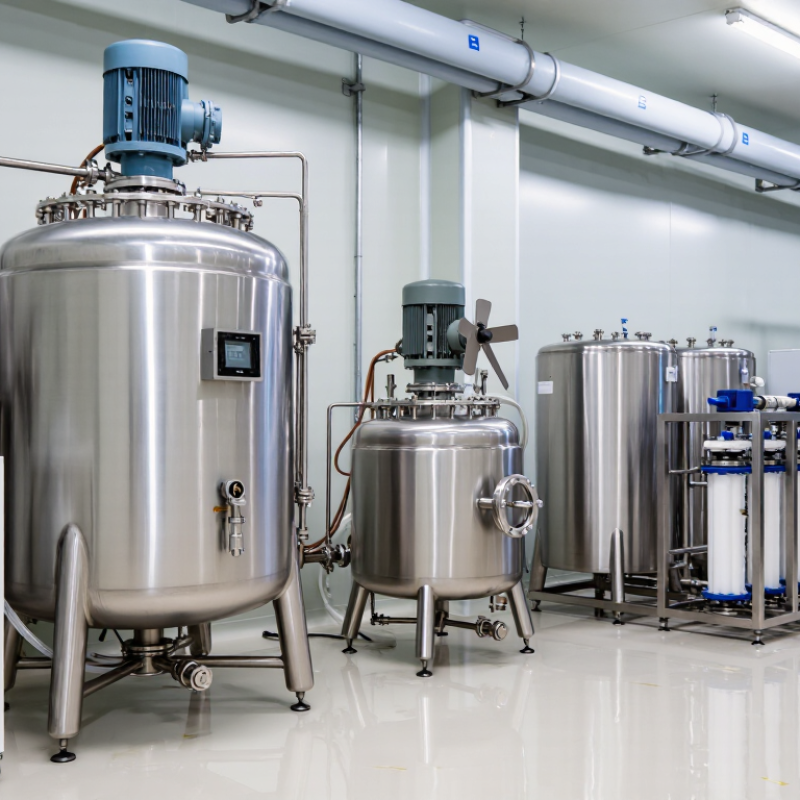
Table of Contents
[Hide]
Biopharmaceutical Equipment Taxonomy: From Process Scale to GMP Compliance
Top Types of Biopharmaceutical Processing Equipment?
Biopharmaceutical Equipment Taxonomy: From Process Scale to GMP Compliance
Biopharmaceutical processing equipment is best classified by process scale, product contact, and GMP responsibility. A stainless-steel vessel may support research, pilot production, or commercial manufacturing, but its controls differ greatly. Common categories include bioreactors, mixers, filtration systems, centrifuges, chromatography skids, filling units, and cleaning systems. Each performs a defined task. However, equipment names alone do not prove suitability.
At laboratory scale, benchtop bioreactors and small membrane systems help teams study cell growth, mixing, and recovery. Pilot-scale units test whether laboratory findings remain stable during larger batches. Commercial systems require stronger automation, repeatable control, and reliable material flow. In practical equipment reviews, I have seen teams underestimate transfer lines and sampling points. Small dead legs can create serious cleaning concerns.
GMP classification focuses on more than capacity. Product-contact surfaces need suitable materials, hygienic design, and documented maintenance. Sensors require calibration, while software needs controlled access and secure records. Cleaning systems must support repeatable procedures, not informal operator habits. Validation evidence should connect equipment settings with critical process parameters. A pilot unit may need commercial-grade controls when it supports registration batches. This model is useful, but imperfect. Risk depends on the product, process, and facility design. Good taxonomy keeps those differences visible during procurement, qualification, and routine manufacturing.
Top Types of Biopharmaceutical Processing Equipment? – Biopharmaceutical Equipment Taxonomy: From Process Scale to GMP Compliance
| Equipment Category | Primary Unit Operation | Typical Process Scale | Main Equipment Types | Key Process Parameters | Common Construction Materials | GMP Significance | Typical Qualification and Control Activities |
|---|---|---|---|---|---|---|---|
| Cell Bank and Seed Train Equipment | Cell thawing, expansion, inoculum preparation, and culture transfer | Laboratory to commercial scale |
|
Temperature, agitation, dissolved oxygen, pH, cell density, viability, and aseptic transfer conditions | 316L stainless steel, pharmaceutical-grade polymers, fluoropolymer tubing, and sterile connectors | High | Cell bank traceability, temperature mapping, aseptic process controls, electronic records, and contamination monitoring |
| Upstream Bioreactors | Microbial or mammalian cell cultivation for product expression | Research, pilot, and production scale |
|
pH, temperature, dissolved oxygen, agitation, gas flow, pressure, feed rate, osmolality, and viable cell density | 316L stainless steel, single-use multilayer films, silicone, thermoplastic elastomers, and sanitary elastomers | Critical | Installation, operational, and performance qualification; sensor calibration; cleaning or single-use integrity verification; batch-record review |
| Media and Buffer Preparation Systems | Preparation, mixing, adjustment, storage, and transfer of process solutions | Laboratory to large commercial scale |
|
Mixing speed, conductivity, pH, temperature, concentration, volume, hold time, and bioburden | 316L stainless steel, sanitary polymers, single-use films, and validated elastomers | High | Weighing verification, recipe control, mixing uniformity studies, hold-time studies, sanitization validation, and filter integrity testing |
| Gas Supply and Mass-Transfer Systems | Delivery of air, oxygen, carbon dioxide, nitrogen, and process gases | All process scales |
|
Gas flow, oxygen transfer rate, carbon dioxide removal, pressure, filter differential pressure, and exhaust composition | 316L stainless steel, sterile-grade membranes, fluoropolymers, and compatible elastomers | Critical | Flow calibration, filter integrity testing, leak testing, gas-quality verification, alarm testing, and preventive maintenance |
| Harvest and Clarification Equipment | Removal of cells, cell debris, and large particulates from bioreactor harvest | Pilot to commercial scale |
|
Flow rate, pressure, differential pressure, turbidity, solids loading, temperature, and product recovery | 316L stainless steel, polypropylene, polyethersulfone, and other validated process polymers | High | Filter compatibility, extractables and leachables assessment, pressure-limit verification, microbial control, and recovery studies |
| Centrifugation Systems | Particle separation, cell harvesting, and solids removal | Laboratory to commercial scale |
|
Rotational speed, flow rate, residence time, centrifugal force, temperature, vibration, and discharge frequency | 316L stainless steel, corrosion-resistant alloys, sanitary seals, and validated disposable components where applicable | High | Balancing, vibration monitoring, cleaning verification, operating-limit testing, seal inspection, and automated control verification |
| Chromatography Systems | Capture, intermediate purification, polishing, and impurity removal | Laboratory to commercial scale |
|
Column volume, flow rate, pressure, conductivity, pH, ultraviolet absorbance, gradient profile, and pool criteria | 316L stainless steel, glass, polycarbonate, polypropylene, and chemically compatible membrane materials | Critical | Resin lifetime studies, column packing qualification, pressure testing, sensor calibration, cleaning validation, and carryover assessment |
| Tangential Flow Filtration Systems | Concentration, diafiltration, buffer exchange, and some clarification steps | Laboratory to commercial scale |
|
Transmembrane pressure, feed flow, permeate flux, retentate flow, conductivity, product concentration, and temperature | 316L stainless steel, polysulfone, polyethersulfone, regenerated cellulose, and sanitary tubing | Critical | Membrane compatibility, flux and recovery studies, pressure-limit verification, integrity testing, cleaning validation, and hold-time assessment |
| Virus Filtration Systems | Removal of viruses and virus-sized contaminants from biologics | Pilot to commercial scale |
|
Flux, pressure, throughput, temperature, product concentration, filter loading, and virus-retention performance | Polyethersulfone or other validated membrane materials, polypropylene, fluoropolymer tubing, and sanitary connectors | Critical | Virus-clearance studies, filter integrity testing, pressure monitoring, throughput validation, extractables assessment, and aseptic connection control |
| Sterile Filtration Equipment | Removal of bacteria and particulates before aseptic filling | Laboratory to commercial scale |
|
Differential pressure, flow rate, filter area, temperature, product compatibility, bioburden, and bacterial retention | Polyethersulfone, polypropylene, fluoropolymer, 316L stainless steel, and validated elastomers | Critical | Bacterial retention validation, pre-use post-sterilization integrity testing, pressure testing, bioburden control, and filter traceability |
| Viral Inactivation Systems | Chemical or low-pH inactivation of enveloped viruses | Pilot to commercial scale |
|
pH, temperature, mixing, contact time, product concentration, hold volume, and neutralization conditions | 316L stainless steel, glass-lined surfaces where suitable, single-use films, and chemically compatible tubing | Critical | Time and temperature mapping, pH sensor calibration, mixing studies, viral-clearance validation, alarm testing, and batch-record controls |
| Formulation and Bulk Drug Substance Tanks | Final formulation, dilution, blending, and controlled bulk storage | Pilot to commercial scale |
|
Mixing uniformity, pH, conductivity, temperature, concentration, osmolality, volume, and maximum hold time | 316L stainless steel, pharmaceutical-grade single-use films, silicone tubing, and sanitary seals | Critical | Mixing validation, hold-time studies, container-closure evaluation, cleaning validation, temperature monitoring, and microbial control |
| Aseptic Filling and Finishing Equipment | Filling, stoppering, capping, and final container handling | Clinical to commercial scale |
|
Fill volume, line speed, environmental conditions, container-closure integrity, particulate levels, and intervention frequency | 316L stainless steel, borosilicate glass, pharmaceutical polymers, silicone, and sterile single-use components | Critical | Media fills, environmental monitoring, aseptic process simulation, fill-weight verification, container-closure integrity testing, and cleaning validation |
| Lyophilization Equipment | Controlled freezing, primary drying, and secondary drying | Laboratory to commercial scale |
|
Shelf temperature, chamber pressure, product temperature, condenser temperature, drying time, and endpoint determination | 316L stainless steel, pharmaceutical glass, silicone, and validated elastomers | Critical | Chamber leak testing, temperature and pressure mapping, cycle development, sterilization validation, load-pattern studies, and continued process verification |
| Cold Storage and Controlled-Temperature Equipment | Storage of cell banks, intermediates, drug substance, and finished products | Laboratory to warehouse scale |
|
Temperature range, uniformity, recovery time, alarm limits, door-open duration, backup power, and storage duration | Insulated stainless steel, coated metals, validated refrigeration components, and temperature-resistant polymers | Critical | Temperature mapping, alarm verification, calibration, backup-power testing, excursion management, continuous monitoring, and access control |
| Cleaning-in-Place and Sterilization-in-Place Systems | Automated cleaning, sanitization, and steam sterilization of fixed equipment | Pilot to commercial scale |
|
Cleaning-agent concentration, temperature, flow velocity, contact time, conductivity, rinse endpoint, and steam quality | 316L stainless steel, sanitary diaphragm valves, compatible gaskets, and validated sensors | Critical | Cleaning validation, riboflavin coverage studies, thermal mapping, sterilization validation, conductivity endpoint testing, and drainability verification |
| Single-Use Process Assemblies | Fluid transfer, mixing, filtration, sampling, and temporary storage | Development to commercial scale |
|
Volume, pressure, flow rate, hold time, temperature, connection integrity, and material compatibility | Multilayer polyolefin films, silicone, thermoplastic elastomers, polypropylene, and fluoropolymers | High | Supplier qualification, extractables and leachables assessment, package integrity testing, gamma-irradiation verification, and assembly traceability |
| Process Analytical Technology and Automation | Real-time monitoring, control, data acquisition, and process optimization | All process scales |
|
Sensor accuracy, sampling frequency, control-loop response, alarm limits, data integrity, and critical process parameters | 316L stainless steel, sanitary sensor housings, pharmaceutical polymers, and validated electronic components | Critical | Calibration, software validation, audit-trail review, access control, electronic-record controls, backup testing, and cybersecurity assessment |
| Utilities and Cleanroom Support Equipment | Provision of controlled environmental and process-support conditions | Facility-wide |
|
Temperature, pressure, flow, conductivity, total organic carbon, microbial counts, particle counts, humidity, and air changes | 316L stainless steel, sanitary piping, sterile filters, validated membranes, and cleanroom-compatible materials | Critical | Utility qualification, water-system monitoring, cleanroom classification, HEPA filter testing, environmental monitoring, sanitization, and periodic review |
Related Posts
-

Top Tips for Sourcing Biotherapeutic Molecules Effectively?
-

Top 10 Biologic Drug Production Methods You Need to Know?
-
How to Use Affinity Ligand Technology for Efficient Bioprocessing?
-
2026 Best Biologic Drug Production Suppliers?
-
How to Navigate Biotherapeutic Drug Development Successfully?
-
Best Protein Scaffold Engineering Techniques for Global Buyers?