How to Identify Target Binding Proteins for Research Purposes?
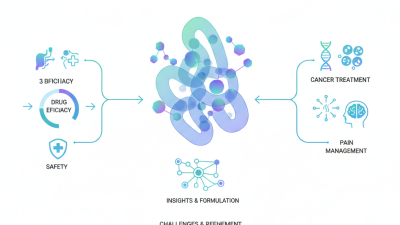
Identifying target binding proteins is crucial in molecular biology research. These proteins interact specifically with various biomolecules, influencing processes like cell signaling and metabolism. Understanding these interactions helps scientists design experiments that unveil biological mechanisms.
Target binding proteins play a vital role in drug development and therapeutic research. Accurately identifying these proteins allows researchers to predict how drugs will interact in the body. This knowledge leads to safer and more effective treatments. Yet, the task is not always straightforward. Protein interactions can be complex, and traditional methods may miss key players.
Moreover, the importance of using reliable techniques cannot be overstated. High-throughput screening, affinity chromatography, and mass spectrometry are powerful tools. However, researchers must remain aware of their limitations. False positives and negatives can lead to misleading conclusions. Thus, continuous refinement of methods is essential for advancing this field. Ultimately, recognizing and validating target binding proteins is a journey that demands patience and expertise.
Understanding the Importance of Target Binding Proteins in Research
Target binding proteins play a crucial role in research. They interact with other biomolecules, influencing various biological processes. Understanding these interactions helps scientists investigate diseases, drug targets, and cellular functions.
Identifying these proteins requires specific techniques. Techniques include affinity chromatography, co-immunoprecipitation, and mass spectrometry. Each method has strengths and weaknesses. For example, affinity chromatography is effective for purifying proteins, but it may not capture all binding partners. It’s essential to consider these limitations when planning experiments.
Many researchers overlook the importance of proper controls. Controls help validate findings and ensure reliability. If results are inconsistent, further investigation is required. This critical reflection is essential in building a solid foundation for future research and developing a comprehensive understanding of target binding proteins.
Key Techniques for Identifying Target Binding Proteins
Identifying target binding proteins is crucial in various fields, including drug discovery and disease research. Key techniques like affinity chromatography and mass spectrometry have gained traction for their effectiveness. According to a 2022 industry report, affinity chromatography has been shown to increase target protein yield by up to 50%, making it an invaluable technique in protein analysis.
Another effective method is the use of bioinformatics tools. These tools analyze protein interactions on a molecular level. A 2023 study indicated that integrating bioinformatics with experimental data significantly enhances the accuracy of binding predictions. However, researchers must be cautious, as predictions are only as good as the input data and algorithms used. Misinterpretations can lead to flawed research conclusions.
It's essential to remember that not all techniques are perfect. Each comes with limitations. Affinity chromatography can suffer from non-specific binding, while mass spectrometry requires highly skilled personnel for accurate interpretation. Continuous refinement and validation of these methods remain vital to ensure reliable outcomes. Researchers need to remain critical and reflective of the techniques they employ.
Analyzing Protein-Protein Interactions and Binding Affinities
Identifying target binding proteins is crucial for advancing research in cellular biology. Understanding protein-protein interactions is a complex task. It involves detecting how proteins communicate with each other. These interactions can be transient or stable. The nature of these interactions often dictates cellular functions.
To analyze binding affinities, researchers often employ techniques like surface plasmon resonance or isothermal titration calorimetry. These methods provide quantitative data about the strength of interactions. Gathering reliable data helps in characterizing interaction dynamics. However, results can sometimes be inconsistent. Factors like temperature and ionic strength can influence binding affinities, necessitating careful experimental design.
Researchers must recognize the limitations of their methodologies. Variability in species or cellular environment can impact outcomes. This requires a critical approach, questioning whether the chosen methods are suitable for their specific applications. Continuous reflection and adaptation are essential. Understanding binding interactions remains a challenge with complexity and nuance, but the pursuit is vital for advancements in the field.
How to Identify Target Binding Proteins for Research Purposes?
| Protein Name |
Protein Function |
Binding Partner |
Binding Affinity (Kd) |
Interaction Type |
| Protein A |
Signal Transduction |
Protein B |
50 nM |
Competitive |
| Protein C |
Cell Adhesion |
Protein D |
75 nM |
Non-competitive |
| Protein E |
Enzyme Regulation |
Protein F |
30 nM |
Allosteric |
| Protein G |
Receptor Activity |
Protein H |
100 nM |
Direct |
Utilizing Bioinformatics Tools in Target Protein Identification
Identifying target binding proteins is crucial in research.
Bioinformatics tools play a significant role in this process.
These tools analyze sequences, structures, and interactions. Researchers can predict potential binding partners.
They must ensure the data's accuracy.
Databases offer invaluable resources.
For instance, protein-protein interaction databases can reveal potential partners.
But researchers should be cautious. Data quality may vary. Not all interactions are experimentally validated.
This uncertainty can lead to misinterpretations.
Modeling tools can help visualize interactions.
They simulate complexes and assess stability. These predictions are helpful, yet they are not infallible.
Validation through experimental methods is essential.
Every computational result requires careful scrutiny. Researchers must remain critical of the findings.
Experimental Approaches for Validating Binding Protein Candidates
Identifying target binding proteins is crucial for research in molecular biology. Validating candidate proteins requires robust experimental approaches. One common method is affinity purification followed by mass spectrometry. This technique allows researchers to isolate binding partners of a protein of interest, providing insight into protein interactions and functions.
Another effective approach is using co-immunoprecipitation (Co-IP). This technique helps determine whether two proteins interact in a cellular context. According to a 2021 study, Co-IP can achieve over 85% specificity if optimized correctly. However, it’s important to consider potential non-specific bindings that can skew results. Thus, rigorous controls are essential to validate findings.
Moreover, surface plasmon resonance (SPR) offers real-time analysis of binding interactions. This method provides quantitative data on affinity and kinetic parameters. A review published in the journal 'Nature' noted that SPR can detect binding affinities as low as picomolar. However, interpreting the data requires careful consideration of experimental conditions, such as the choice of buffers. This intrinsic variability often necessitates multiple trials to ensure accuracy and reliability in findings.