Choosing the right Antibody Purification Technology in 2026 requires more than comparing recovery percentages. A process that performs well in a small laboratory column may struggle during commercial manufacturing. Resin lifetime, buffer consumption, cycle time, and facility capacity can change the final decision. The best choice connects scientific performance with operational reality.
Experienced teams usually begin with the antibody’s behavior. Is it sensitive to low pH? Does it aggregate during concentration? Can Protein A capture the product cleanly, or will mixed-mode polishing reduce host-cell proteins more effectively? These questions guide the selection of affinity, ion-exchange, hydrophobic-interaction, membrane, or continuous purification approaches. Small-scale screening can reveal unexpected results, such as pressure increases after repeated cycles or lower recovery at higher antibody concentrations.
Data matters most.
In 2026, reliable selection should include quality, scalability, sustainability, and regulatory readiness. A useful evaluation compares yield, purity, aggregate levels, viral clearance, process time, and cost per gram. It should also examine single-use compatibility and digital process monitoring. No platform is perfect. A familiar technology may be easier to validate, but it might consume more water and buffer. A newer solution may reduce processing time, yet bring limited long-term manufacturing experience. That assumption can fail.
This guide introduces a practical framework for choosing purification technology with evidence, realistic constraints, and careful risk assessment. It also highlights where published performance may not match plant-floor conditions. Experiences from development laboratories and manufacturing teams remain valuable, because reliable decisions rarely come from one metric alone.

Choosing antibody purification technology in 2026 starts with defining the product, not comparing equipment catalogs. The target molecule may require low aggregates, controlled charge variants, and strict host-cell protein limits. Write these limits before selecting a platform. A 2 mL development sample should answer practical questions. What recovery is acceptable? How many cycles can the resin withstand? Can the process handle a 10,000-liter batch without changing impurity clearance?
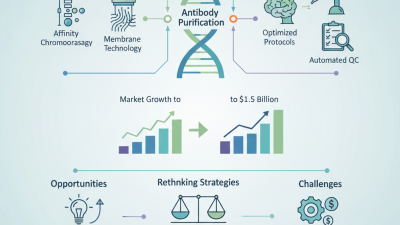
Market growth increases this pressure. Grand View Research estimated the global monoclonal antibody therapeutics market at approximately USD 242 billion in 2023, with strong growth projected through 2030. More products mean tighter capacity and scheduling requirements. BioPlan Associates’ 2024 Annual Report also identifies downstream processing capacity and cost control as continuing manufacturing concerns. These findings support a requirement-led evaluation, rather than a technology-led purchase.
A perfect yield target is usually a trap. Higher recovery can increase aggregates or residual impurities. I would define an acceptable operating window instead. Include yield, purity, throughput, buffer consumption, operator exposure, and validation burden. Test real feed material, not only clean laboratory samples. That detail matters. A method that works beautifully at bench scale may lose resolution during scale-up. Keep the decision evidence-based, but leave room for revision; early specifications are often incomplete.
Protein A chromatography remains the industry’s workhorse. BioPlan Associates’ 2024 biopharmaceutical manufacturing survey reports that about nine in ten facilities use it for antibody capture. Its selectivity is strong, and the workflow is familiar. However, resin cost, alkaline cleaning, and ligand leakage can limit smaller or high-volume processes. A high recovery number does not guarantee a clean product.
Ion-exchange chromatography offers flexible polishing. It separates host-cell proteins, DNA, and aggregates through controlled pH and conductivity. Mixed-mode media can improve selectivity when conventional charge-based separation struggles. The trade-off is method development. Small changes in salt concentration may shift the impurity profile. That is inconvenient.
Membrane chromatography and precipitation can reduce residence time and equipment demands. They may also support continuous or intensified processing. A 2024 MarketsandMarkets report identifies intensified biomanufacturing as a major growth direction, driven by rising antibody demand and capacity pressure. Still, membranes can show lower binding capacity, while precipitation may produce variable solids. I would test both at realistic feed concentrations, not only in clean laboratory buffers. Product quality should be judged beside yield, cycle time, consumables, and waste. The best platform is rarely the newest one.
Antibody purification in 2026 should begin with molecule behavior, not equipment preference. The 2024 BioPlan Annual Report highlights throughput, resin cost, and supply security as continuing manufacturing concerns. These pressures make method selection a practical balance, not a single technical decision.
For a conventional IgG with stable Fc structure, Protein A capture remains efficient. It can deliver high selectivity from clarified cell culture fluid. However, low-pH elution may increase aggregation for sensitive molecules. Test hold-time effects early.
For fragments, Fc-free antibodies, or multispecific formats, mixed-mode, ion-exchange, or affinity alternatives may perform better. Charge variants need fine pH control. Hydrophobic impurities may require polishing with hydrophobic interaction chromatography or membrane-based approaches.
Small batches often benefit from flexible membrane adsorbers. Large campaigns may favor packed columns with strong resin lifetime data. According to Grand View Research, the global antibody production market was valued at about 17.6 billion dollars in 2023, with strong growth projected through 2030. Rising volume increases the cost of weak process decisions. Still, market growth does not prove one platform fits every antibody.
A practical screen should compare recovery, aggregate level, host-cell protein clearance, pressure, and cycle time. Use the actual molecule. Not just a handbook example. A clean chromatogram can hide poor stability during storage or concentration. I have seen promising screens fail after scale-up. That failure is useful evidence, if the process team records it honestly.
Choosing antibody purification technology in 2026 requires more than comparing recovery percentages. Process scale changes the decision. A small laboratory method may tolerate manual steps, while a commercial process needs consistent flow, closed handling, and reliable cleaning. In process development work, I have seen high-performing methods struggle when buffer use doubles. Chromatography, membrane systems, and precipitation each create different equipment and labor demands. The best choice fits the complete process, not one attractive performance result.
Cost should include resin lifetime, buffer preparation, filtration, energy, labor, waste treatment, and equipment maintenance. A cheaper unit operation may become expensive at large scale. Conversely, a higher-cost material can reduce cycle time and facility pressure. Build a model using realistic batch sizes, not optimistic assumptions. Include failed runs. They happen.
Regulatory needs must influence selection from the pilot stage. The process should support documented raw materials, traceable parameters, validated cleaning, and consistent impurity clearance. Viral safety evidence and product quality data also need a clear rationale. Single-use equipment may reduce cleaning validation, but it introduces supply and disposal questions. Established chromatography steps can simplify regulatory discussions, yet they may consume substantial water and buffer. No option is automatically compliant. Reviewers will examine control strategies, scalability, and evidence behind every critical claim.
Evaluating process scale, cost efficiency, and regulatory readiness
This normalized 1–5 assessment compares common antibody purification approaches. Higher scores indicate better suitability for large-scale processing, lower relative consumable cost, or stronger regulatory maturity. Protein A and ion-exchange chromatography offer the most established regulatory pathways, while precipitation and membrane adsorbers can improve cost efficiency when process robustness and product-specific validation are addressed.
Scores are indicative, technology-level evaluations based on common bioprocess characteristics; actual performance depends on molecule properties, product concentration, facility design, and validation requirements.
Building a reliable antibody purification workflow starts with the product, not the equipment. Define the antibody format, expected titer, sample volume, and required purity. Record pH, conductivity, and biological activity targets. These details guide practical technology choices. Do not choose a method because it is popular. A small pilot run can reveal more than a polished specification sheet.
Capture conditions should protect yield and structure. Affinity capture may simplify early processing, while ion exchange can improve impurity removal. Size-based polishing can reduce aggregates when the molecule tolerates the pressure and residence time.
Test membrane compatibility, column loading, and buffer consumption under realistic conditions. Measure recovery after every step. Check purity with orthogonal methods, such as electrophoresis and size-exclusion analysis. Keep samples from each stage for traceable comparison.
Reliability depends on repeatability, not one successful batch. Establish acceptance ranges for yield, purity, aggregate levels, and processing time. Monitor critical variables during scale-up, especially temperature and conductivity. Use clear records and controlled change procedures. No workflow is perfect. Teams sometimes overlook hold-time effects or assume a clean chromatogram proves stability. That assumption deserves challenge. A failed pilot is useful when its cause is documented. Revisit the workflow after each study, even when results look acceptable.