Choosing the right Affinity Resin Technology in 2026 requires more than comparing brochure specifications. A resin may deliver strong binding in a laboratory column, yet perform poorly during repeated manufacturing cycles. The best choice depends on the target molecule, feedstock complexity, process scale, and acceptable cost of goods.
A practical evaluation begins with binding capacity, selectivity, mass transfer, pressure tolerance, and cleaning performance. For monoclonal antibodies, Protein A remains familiar, but newer ligands may reduce cost or improve alkaline stability. For vaccines, enzymes, and recombinant proteins, different ligands can offer better selectivity and gentler elution conditions. Small details matter. A resin that releases the product at pH 3.5 may protect one molecule but damage another.
Test the real feedstock.
Laboratory data should include dynamic binding capacity, breakthrough behavior, recovery, purity, and ligand leakage. Repeated cycling also reveals hidden weaknesses. A resin may look efficient after three runs, then lose performance after fifty. That gap deserves attention. Manufacturers should review extractables, leachables, bioburden control, documentation, and supply consistency before making a purchase decision.
No single platform is universally superior. That is easy to say, but often ignored. In my experience, teams sometimes select familiar technology before defining the actual process risk. A better approach combines supplier evidence, small-scale trials, and transparent cost modeling. This article examines the main Affinity Resin Technology options for 2026, helping process developers make decisions that are technically defensible, commercially realistic, and suitable for future validation.
How to Choose Affinity Resin Technology in 2026?
What Is Affinity Resin Technology?
Affinity resin technology is a separation method built around selective molecular recognition. A porous solid matrix carries ligands that bind a target biomolecule. The ligand may recognize a specific tag, antibody region, enzyme site, or natural binding partner. When a sample flows through the column, unwanted components pass through while the target remains attached.
The target is later released by changing conditions, such as pH, salt concentration, or a competing molecule. It sounds simple. It is not magic. In real laboratory work, binding can weaken when the feed contains detergents, particles, or high protein levels. I have seen clear samples produce poor recovery because the resin was overloaded. Small resin screens can reveal this early.
Choosing the technology requires more than checking binding capacity. Measure recovery, purity, pressure flow, ligand stability, and cleaning tolerance. Test the resin with the actual sample matrix, not only a purified model solution. Consider dynamic binding capacity at the intended flow rate. A high number under ideal conditions may not reflect production performance. Also review leachable levels, reuse potential, and validated operating ranges. Some protocols look efficient on paper but become fragile after repeated cleaning cycles. That weakness deserves careful investigation.
How to Choose Affinity Resin Technology in 2026?
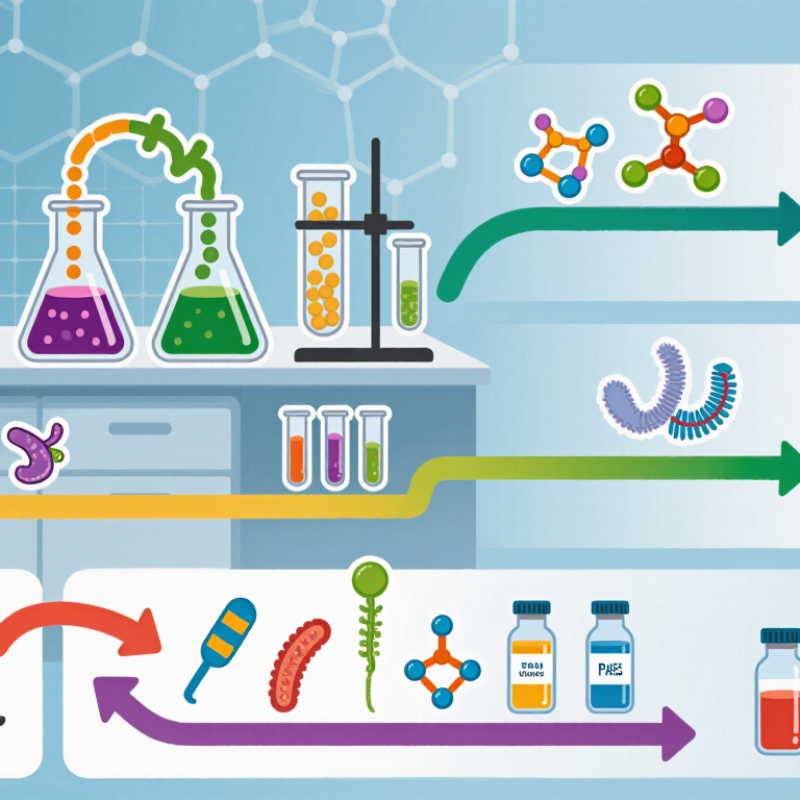
How Affinity Resins Capture and Release Target Molecules
Affinity resins work through selective, reversible binding. A ligand on each porous bead recognizes the target molecule. The sample flows through the packed column, while unwanted proteins move ahead. Capture depends on ligand density, pore size, binding chemistry, and flow rate. In practical purification work, I check these factors before comparing specifications. A high binding capacity may still perform poorly with a viscous or impure sample.
Release requires a controlled change in conditions. Adjusting pH can weaken the target-ligand interaction. Salt, a competing molecule, or a milder elution solution may also help. The best method protects the target from aggregation and activity loss. I prefer testing small fractions during development, because the first visible peak can be misleading. Resin fouling is another concern. It may develop slowly and remain unnoticed until pressure rises.
Tips: Measure dynamic binding capacity under realistic feed conditions, not only in clean buffer. Compare recovery, purity, pressure, and regeneration stability. Keep the residence time consistent during tests. Small changes matter. Record the exact pH, conductivity, temperature, and wash volume. I once underestimated sample viscosity, and the result looked like poor resin chemistry. It was partly a process problem. That distinction deserves another check.
When choosing affinity resin technology in 2026, compare measurable properties, not impressive claims. Start with binding capacity at your actual feed concentration. A high static capacity may not deliver high dynamic capacity during flow. Test it wet. Use representative samples containing host-cell proteins, nucleic acids, salts, and product variants.
Selectivity deserves equal attention. Measure product recovery, impurity clearance, and unwanted binding across realistic pH and conductivity ranges. Resin particle size affects pressure, flow speed, and column efficiency. Smaller particles can improve resolution, but they may increase backpressure. That trade-off matters during scale-up. Check chemical stability during sanitization, storage, and repeated cycling. A resin that performs well for five cycles may not remain economical after fifty.
Leachables, extractables, and ligand stability also require documented evaluation. Ask for lot consistency, technical data, and clear test methods. In my experience, resin lifetime often depends on cleaning conditions more than laboratory results suggest. Review pressure-flow curves on the intended equipment, not only on a small column. Small differences matter. I have seen teams favor capacity and later struggle with fouling, slow processing, or difficult elution. Cost per liter is incomplete; calculate cost per recovered gram, including buffer use, labor, testing, and disposal. No resin wins every comparison. Your feedstock and process limits should decide the balance.
| Resin Property | Typical Comparison Unit | Practical Comparison Range | Priority | How to Evaluate the Property |
|---|---|---|---|---|
| Binding Capacity | mg target per mL resin | Approximately 5–100 mg/mL, depending on ligand, target molecule, and test conditions | High | Compare dynamic binding capacity at the intended flow rate rather than relying only on static capacity. Use the same feed composition and residence time for a meaningful comparison. |
| Dynamic Binding Capacity at 10% Breakthrough | mg/mL | Often lower than static capacity; commonly evaluated at 2–10 minutes of residence time | High | This is one of the most useful scale-up indicators because it reflects loading performance under process flow conditions. |
| Ligand Selectivity | Selectivity factor or recovery data | Target-dependent; should be confirmed using clarified feed or process-relevant impurities | High | Assess target recovery, host-cell proteins, nucleic acids, aggregates, and product-related impurities. A high-capacity resin is not necessarily highly selective. |
| Particle Size Distribution | µm | Common process media: approximately 45–165 µm; smaller particles generally improve mass transfer but increase pressure drop | High | Select particle size according to column dimensions, flow rate, pressure limits, and required productivity. Ask for both mean size and distribution data. |
| Pressure–Flow Performance | bar or MPa at a stated flow rate | System-dependent; compare pressure curves under identical column packing and buffer conditions | High | Review pressure versus linear velocity, bed compression behavior, and the effect of feed viscosity. Pressure performance can determine usable column scale. |
| Base Matrix Material | Material type | Common options include cross-linked agarose, synthetic polymer, cellulose, and composite matrices | High | Compare hydrophilicity, mechanical strength, nonspecific adsorption, chemical resistance, and suitability for the intended purification mode. |
| Pore Structure and Accessibility | Pore size or exclusion limit | Must be matched to the molecular size of the target and the desired mass-transfer rate | High | Large biomolecules may require wider pores or surface-accessible ligands. Confirm performance with the actual target instead of using pore size alone as a proxy. |
| Mass-Transfer Kinetics | Residence time or kinetic constant | Evaluate at process-relevant residence times, commonly from about 1–10 minutes | High | Fast kinetics support shorter columns, higher throughput, and better utilization of resin capacity. Compare breakthrough curves whenever possible. |
| Chemical Stability | pH and exposure time | Typical process ranges may include approximately pH 2–13, depending on matrix and ligand chemistry | High | Verify compatibility with equilibration, washing, elution, sanitization, and cleaning solutions. Short-term compatibility does not always indicate long-term lifetime. |
| Sanitization Compatibility | Chemical concentration and contact time | May include alkaline cleaning, acidic cleaning, alcohols, or other validated sanitization agents | High | Check capacity and pressure after repeated cleaning cycles. The resin should retain acceptable performance under the intended cleaning-in-place protocol. |
| Operating pH Range | pH units | Often broader than the target molecule’s stability range; actual limits depend on ligand and matrix | High | Compare the usable operating range with the target’s isoelectric point, stability profile, and the pH required for selective binding and elution. |
| Nonspecific Adsorption | % recovery loss or impurity adsorption | Should be minimized; measure with the target, formulation components, and representative process impurities | High | High nonspecific binding can reduce yield, increase fouling, and complicate cleaning. Evaluate both target recovery and impurity carryover. |
| Ligand Leakage | ng/mL or µg/mL in product pool | As low as reasonably achievable and controlled by the applicable quality requirements | High | Request validated or qualified analytical methods, leachables information, and data across multiple cleaning and operating cycles. |
| Extractables Profile | Detected compounds and concentration | Should be characterized under representative buffer, pH, temperature, and cleaning conditions | Medium | This is especially important for regulated manufacturing. Compare the extractables risk of the matrix, ligand, linkers, and manufacturing residues. |
| Resin Lifetime | Validated cycles or operating months | Application-dependent; commonly established through accelerated cycling and real process data | High | Evaluate capacity, selectivity, pressure, fouling, microbial control, and ligand leakage after repeated use—not just initial performance. |
| Storage Stability | Months under specified conditions | Often evaluated over 12–60 months, depending on storage solution and packaging | Medium | Review recommended temperature, storage solution, shelf life, microbial-control strategy, and post-storage performance acceptance criteria. |
| Batch-to-Batch Consistency | Coefficient of variation or specification range | Compare capacity, particle size, pressure, ligand density, and selectivity across multiple production lots | High | Consistent resin properties reduce process requalification risk and help maintain predictable yield during commercial manufacturing. |
| Scale-Up Compatibility | Column diameter, bed height, and flow rate | Demonstrate comparable performance from laboratory columns to pilot and production scale | High | Assess packing behavior, axial dispersion, residence-time distribution, pressure, and breakthrough behavior at increasing column diameters. |
| Process Productivity | g product/L resin/hour | Target-specific; calculate from capacity, cycle time, flow rate, recovery, and cleaning requirements | High | Compare complete cycle productivity rather than loading capacity alone. Include equilibration, wash, elution, regeneration, and cleaning time. |
| Regulatory and Quality Documentation | Documentation package | Should include specifications, test methods, change-control information, traceability, and relevant safety data | High | For regulated applications, confirm the availability of material composition, manufacturing controls, extractables information, and lot-release documentation. |
Comparison note: Resin performance is target- and process-dependent. Values should be confirmed using the intended molecule, feed stream, buffers, residence time, cleaning cycle, and column configuration before final selection.
How to Choose Affinity Resin Technology in 2026?
Matching resin technology to the purification goal starts with the molecule, not the column. For monoclonal antibodies, Protein A remains attractive because it offers high selectivity and concentrated capture. However, it may struggle with certain antibody formats, aggregates, or harsh cleaning conditions. For charged proteins, ion-exchange resin can provide strong polishing performance when pH and conductivity are carefully controlled. Hydrophobic-interaction resin is useful when aggregate removal matters. Mixed-mode resin can help when one separation mechanism is not enough.
The 2024 Global Biopharmaceutical Manufacturing Capacity and Production Survey collected responses from more than 300 industry professionals. It highlighted capacity, process robustness, and supply continuity as persistent manufacturing concerns. These findings make dynamic binding capacity important, but capacity alone is not the answer. A resin with 60 g/L binding capacity may perform poorly if its selectivity changes during feed variation. Test feed quality, residence time, pressure, recovery, and cleaning stability. Small-scale trials often expose hidden problems.
Look beyond the first chromatogram.
In practical development, teams should compare impurity clearance, resin lifetime, buffer use, and scale-up behavior. Analytical data should support every decision, including host-cell protein, DNA, aggregates, and residual ligand testing. Some selections still rely too heavily on vendor claims or one favorable batch. That is risky. A resin may win during screening and fail after repeated sanitization. The better choice is the one that meets the purification target consistently, with measurable evidence and room for process variability.
Match the resin type with the purification goal by comparing target specificity and representative binding-capacity ranges.
The ranges show commonly reported laboratory-scale capacities in mg of target per mL of settled resin. Actual performance depends on ligand density, protein size, buffer conditions, flow rate, and sample quality.
How to Choose Affinity Resin Technology in 2026?
When choosing affinity resin technology in 2026, start with the molecule, not the brochure. Measure binding capacity, selectivity, recovery, and impurity clearance using your actual feedstock. A resin may perform well in purified buffer but struggle with a dense harvest. That gap matters. Run small studies across pH, conductivity, residence time, and load density. Record pressure changes after repeated cycles. Practical testing often reveals more than headline specifications.
Cost evaluation should include more than resin price. Calculate buffer use, cycle time, cleaning chemicals, labor, waste treatment, and replacement frequency. A lower-priced material may become expensive after several short cycles. Compare productivity per liter of resin, not only initial purchase cost. Check whether cleaning conditions reduce capacity over time. This is easy to overlook. I would also model three scenarios: expected performance, weak performance, and an optimistic case. The weak case is often the most useful.
Scale-up requires evidence from equipment that resembles the planned process. Test flow distribution, column packing, pressure limits, and heat transfer behavior. Confirm that the resin maintains performance at larger bed heights and realistic flow rates. Review sanitization compatibility and storage stability. Supply continuity also matters, especially during process validation. Some evaluations remain incomplete because teams trust a small column too quickly. That judgment deserves a second look. Keep batch records, raw data, and acceptance criteria clear enough for independent review.