How to Understand Protein Binding Technology and Its Applications?
In the realm of drug development, Protein Binding Technology plays a crucial role. This innovative approach focuses on understanding how drugs interact with proteins in the body. Dr. Emily Chen, a leading expert in pharmacology, once stated, "Understanding protein binding is key to optimizing drug efficacy and safety." Her insight underscores the significance of this technology.
Protein binding can significantly impact a drug's potency and distribution. For instance, when a drug binds well to plasma proteins, it may stay in circulation longer. However, this can also lead to unpredictable side effects. Balancing efficacy and safety often requires deep analysis. Challenges in this field make it necessary for researchers to rethink traditional methods.
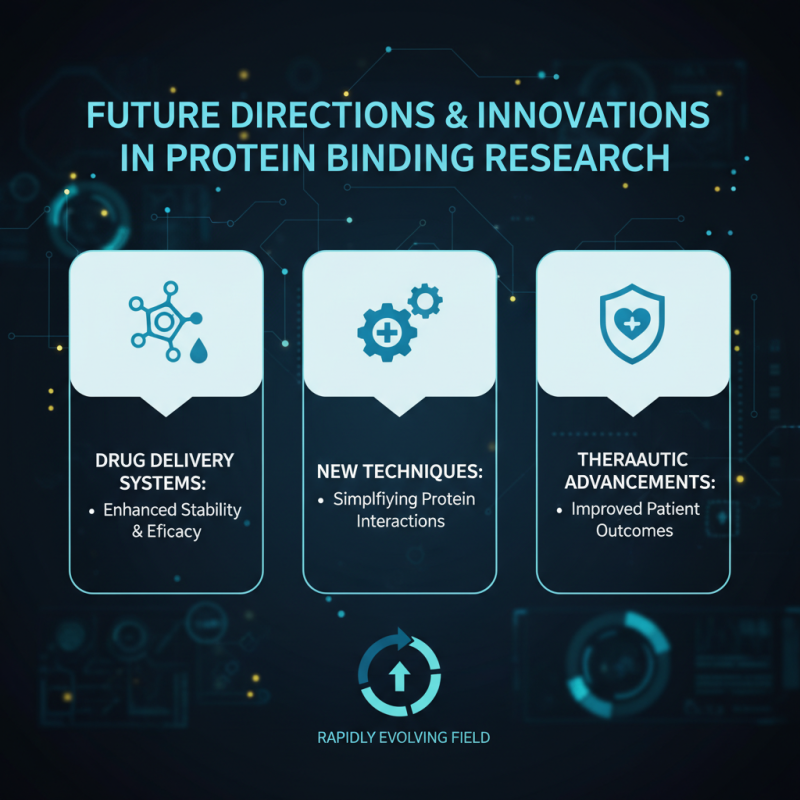
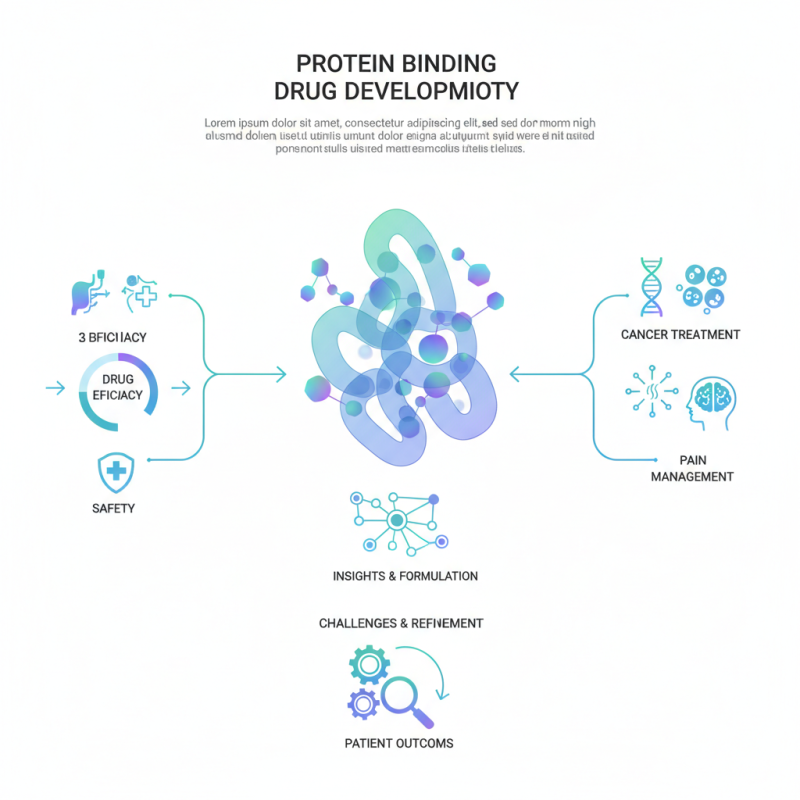
The applications of Protein Binding Technology are extensive, yet complexities remain. Whether in cancer treatment or pain management, clear insights into protein interactions can guide drug formulation. Nevertheless, the industry still faces obstacles that require ongoing refinement and exploration. Continuous research is vital for advancements and improved patient outcomes.
What is Protein Binding Technology?
Protein binding technology is a vital aspect of pharmacology and biochemistry. It refers to how drugs interact with proteins in the bloodstream. Understanding this technology helps predict drug behavior and efficacy. According to the International Society for Pharmaceutical Engineering, over 90% of drugs are protein-bound to varying extents. This binding can significantly affect a drug's distribution and metabolism.
In clinical practices, measuring protein binding can be complex. For instance, the bioavailability of a drug can be altered if there is high protein binding. A report from the National Institutes of Health revealed that approximately 40% of clinical drug failures are linked to poor pharmacokinetics. This statistic highlights the importance of precise understanding in drug development. Researchers must consider both free and bound drug concentrations for accurate dosing.
Moreover, challenges arise in different patient populations. Factors such as age, disease state, and nutritional status influence protein levels. Consequently, understanding these variables is crucial for personalized medicine. Biochemical interactions can vary notably, yet studies often overlook individual differences. Addressing these imperfections in research can pave the way for more effective therapies.
Protein Binding Capacity of Different Pharmaceuticals
This bar chart illustrates the protein binding capacity of various pharmaceuticals, indicating how much each drug binds to proteins in the bloodstream. High protein binding can affect the drugs' distribution, efficacy, and elimination from the body.
Mechanisms of Protein Binding in Biological Systems
Protein binding mechanisms play a crucial role in understanding how proteins interact within biological systems. When proteins bind to other molecules, they often undergo conformational changes. These changes can affect their function and specificity. For example, when a protein binds to a ligand, it may allow regulatory functions or enable signal transduction. This dynamic process is vital in drug development and disease treatment.
Understanding the nuances of protein binding can be complex. It involves multiple factors such as binding affinity and specificity. Various environmental conditions, like pH and temperature, can influence these interactions. Additionally, some proteins can bind multiple partners, adding another layer of complexity. Not all binding interactions are straightforward; some can lead to unintended consequences. Misunderstanding these interactions can result in ineffective therapies.
Researchers continually study these mechanisms to unlock their potential. Advancements can lead to better therapeutics and diagnostics. Yet, the complexity of biological systems means challenges remain. The interplay of proteins in various environments may not always yield predictable outcomes. This unpredictability underscores the importance of ongoing research in the field. Understanding protein binding requires patience and a willingness to explore the unknown.
Methods for Analyzing Protein Binding Properties
Analyzing protein binding properties is crucial in biochemistry and pharmaceutical research. It helps determine how drugs interact with proteins in the body. A study found that approximately 90% of marketed drugs bind to plasma proteins. This underscores the need for precise analysis methods.
Key methods for assessing protein binding include filter ultrafiltration, equilibrium dialysis, and Surface Plasmon Resonance (SPR). Filter ultrafiltration is widely used due to its simplicity. However, it may not account for binding kinetics effectively. Equilibrium dialysis provides reliable data on free drug concentration. Still, it can be time-intensive.
SPR, on the other hand, allows real-time monitoring of interactions. This technique has become increasingly popular in the industry. Reports indicate that SPR can provide insights into binding affinity and kinetics with high sensitivity. Yet, it requires specialized equipment and expertise. Understanding these methods allows researchers to select the most appropriate technique for their specific applications.
How to Understand Protein Binding Technology and Its Applications? - Methods for Analyzing Protein Binding Properties
| Method |
Description |
Applications |
Advantages |
Limitations |
| Equilibrium Dialysis |
A method to measure the binding of drugs to proteins using a dialysis membrane. |
Used in pharmacokinetics to determine free drug concentrations. |
High precision and simplicity. |
May require long equilibration time. |
| Surface Plasmon Resonance (SPR) |
A label-free method for real-time analysis of molecular interactions. |
Used for studying binding affinities and kinetics. |
Real-time data collection and no need for labels. |
High initial setup costs and complex data analysis. |
| Ultrafiltration |
A method for separating molecules based on size using a semipermeable membrane. |
Commonly used in drug formulation development. |
Fast and efficient in sample processing. |
May suffer from membrane fouling. |
| Bioanalytical Assays |
Techniques like ELISA to assess protein binding by measuring analyte concentrations. |
Used extensively in clinical and preclinical settings. |
Highly sensitive with the ability to analyze multiple samples. |
Can be time-consuming and requires specific reagents. |
| High-Throughput Screening |
A method for rapidly testing thousands of compounds for protein binding. |
Useful in early-stage drug discovery. |
Can identify potential drug candidates quickly. |
May lack detailed binding kinetics. |
Applications of Protein Binding Technology in Drug Development
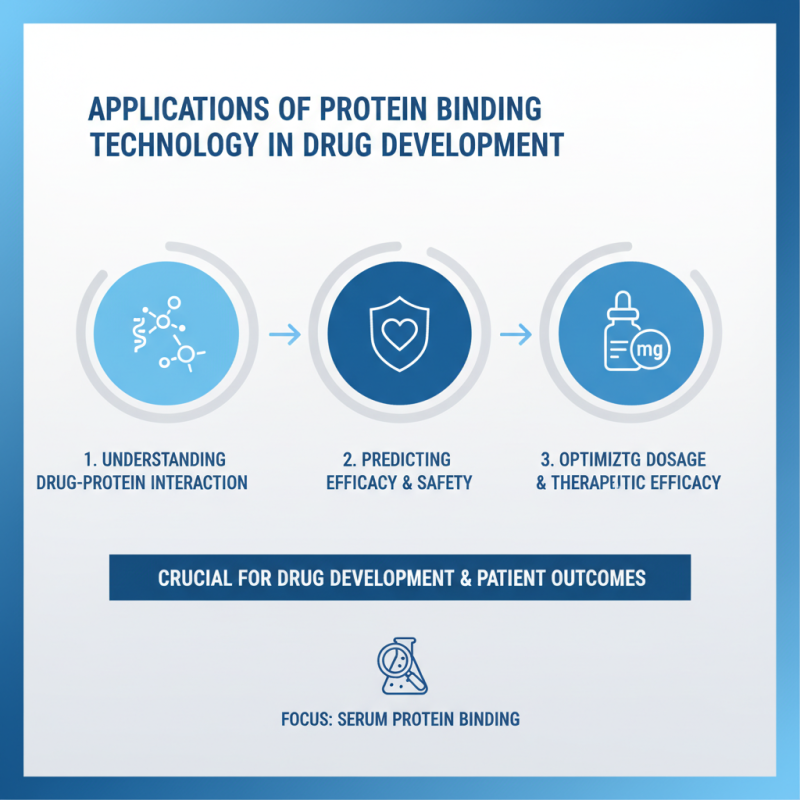
Protein binding technology plays a crucial role in drug development. It informs scientists about how drugs interact with proteins in the body. Understanding these interactions helps predict a drug's effectiveness and safety. Researchers focus on how drugs bind to serum proteins. This knowledge is essential for dosage accuracy and therapeutic efficacy.
One application of this technology is in formulating new drugs. By analyzing protein binding patterns, scientists can modify drug structures. This leads to enhanced effectiveness. Additionally, it helps in minimizing side effects. Precise protein binding data is crucial in early-stage testing. Not every drug behaves the same way in the body. Some may bind too tightly, while others may not bind enough. These variations can impact drug performance.
Moreover, protein binding studies facilitate patient-specific treatments. Personalized medicine relies on understanding individual variations in protein binding. This approach is still evolving. Researchers continuously seek better methods for analysis. Challenges remain in standardizing techniques and interpreting data. As this technology advances, its applications in drug development will expand significantly. The journey is complex but vital for future healthcare innovations.