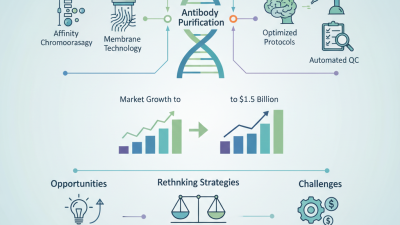
Choosing the right affinity medium can determine whether a purification process remains efficient at laboratory scale or succeeds in commercial production. This guide examines seven leading affinity resin technologies for global buyers, with attention to binding selectivity, dynamic capacity, flow performance, chemical stability, and cost. Affinity Resin Technology is not a single solution. Protein A, Protein G, Protein L, nickel-based IMAC, glutathione, and other ligand systems serve different molecules and process conditions.
Practical evaluation matters more than impressive specifications. A resin may show strong binding in a brochure but perform differently in a packed column, where pressure, residence time, and sample impurities interact. Buyers should review supplier data, certificates of analysis, application notes, and lot-to-lot consistency. They should also examine ligand leakage, cleaning compatibility, storage requirements, and regional technical support. Small details matter. A two-minute change in cycle time can affect an entire production schedule.
The “best” technology depends on the target molecule, sample complexity, scale, and regulatory expectations. Protein A may suit many antibody workflows, while IMAC can offer flexibility for tagged recombinant proteins. Protein L may help when antibody light-chain structure limits other options. Still, no resin performs perfectly in every application. Results can vary with feed composition and operating conditions. That limitation deserves honest consideration. By comparing performance evidence rather than marketing language, global buyers can choose a more reliable resin platform, reduce development risk, and build a purification strategy that remains practical across laboratories, suppliers, and manufacturing locations.
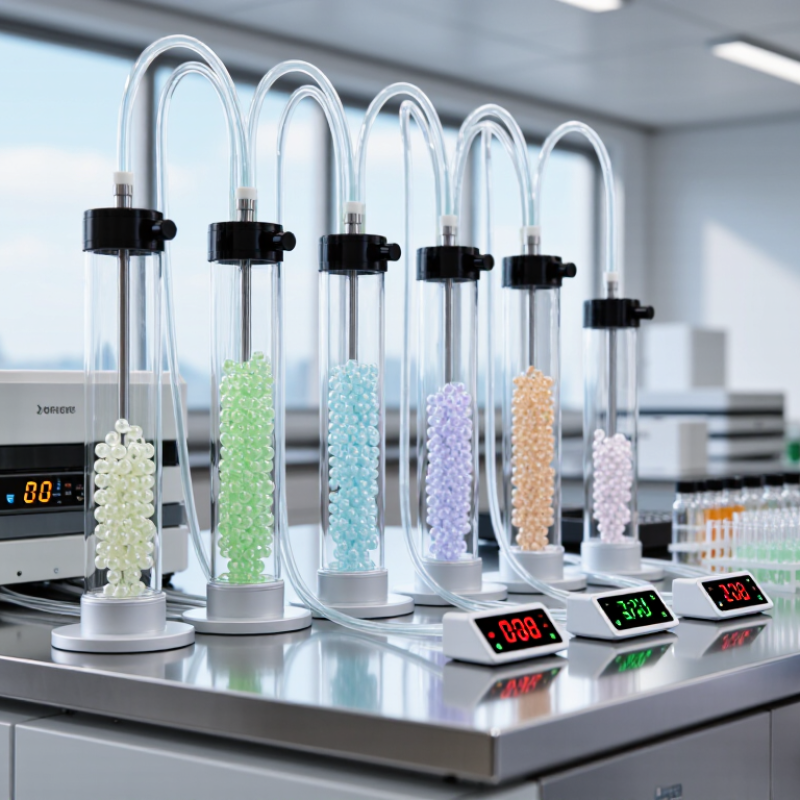
Affinity resin technology separates target molecules through selective binding. A ligand on the resin recognizes a specific protein, antibody, or biomolecule. The target stays attached while impurities move through the column. A controlled pH or salt change then releases the product.
This selectivity can reduce processing steps and protect product quality. It also matters economically. Mordor Intelligence estimates the chromatography resin market will grow steadily through 2030, driven by biopharmaceutical purification demand. BioPlan Associates’ 2024 biomanufacturing survey also identifies downstream capacity, yield, and process consistency as continuing industry concerns. These findings explain why global buyers compare binding capacity, impurity clearance, cleaning stability, and supply continuity.
The best technology is not always the resin with the highest capacity. A resin may perform well in laboratory tests but lose efficiency after repeated cleaning cycles. I have seen this gap create costly redesign work. Buyers should request dynamic binding data, cycle-life studies, extractables information, and performance results using realistic feed streams. Temperature also matters. Cold-chain facilities may need different operating conditions than warmer sites. Custom ligand designs can improve selectivity, but they often increase validation demands and technical risk.
Look closely at the numbers.
A small pressure increase can disrupt scale-up. So can an incomplete supplier dossier. Independent testing remains valuable, especially when comparing natural ligands, engineered ligands, multimodal systems, and mixed-mode affinity formats. Industry reports provide direction, but real process data should make the final decision.
7 Best Affinity Resin Technologies for Global Buyers
Seven leading affinity resin technologies support different purification targets, production scales, and regulatory expectations. Protein A resin remains highly effective for capturing antibodies from clarified cell culture fluid. Protein G resin offers broader antibody binding across several species and subclasses. Protein L resin can bind antibodies through light chains, including some formats that protein-based capture methods miss. These options often deliver strong selectivity, but ligand leakage and cleaning stability require careful evaluation.
IMAC resin captures proteins through histidine-tagged metal coordination. It is practical for research proteins and early process development. Glutathione affinity resin supports purification of glutathione-tagged proteins, although tag accessibility can vary. Lectin affinity resin recognizes specific carbohydrate structures and helps study glycoproteins. Heparin affinity resin is useful for proteins interacting with nucleic acids, growth factors, or coagulation-related pathways. Selective does not mean perfect.
Global buyers should compare binding capacity, particle size, pressure tolerance, chemical compatibility, and documentation. Resin performance can change with feed impurities, temperature, and residence time. Scale changes everything. A small laboratory column may look excellent, yet lose efficiency during packed-bed processing. Pilot testing should include repeated cleaning cycles, recovery measurements, and impurity analysis. One overlooked issue is supply consistency across regions; technical specifications may be clear, while actual lot behavior still deserves verification.
7 Best Affinity Resin Technologies for Global Buyers
How Each Resin Technology Captures Target Biomolecules
Protein A resin captures antibodies through Fc-region binding, offering strong selectivity under mild conditions. Protein G also binds Fc regions, but it often supports a broader range of antibody subclasses. Protein L recognizes selected kappa light chains, making it useful when Fc binding fails. These three options usually suit antibody purification, but binding can vary sharply with species and structure.
Immobilized metal affinity chromatography, or IMAC, captures histidine-tagged proteins through nickel, cobalt, or copper coordination. Glutathione resin binds GST-tagged proteins through enzyme-substrate recognition. Lectin resin captures glycoproteins by recognizing specific carbohydrate patterns. Heparin resin uses charge and structural interactions to retain growth factors, nucleic-acid-binding proteins, and coagulation-related targets. The mechanism matters more than the label.
BioPlan Associates’ 2024 industry report gathered feedback from more than 130 biomanufacturing organizations, reflecting continued pressure to improve productivity and reduce processing steps. Market analyses published by Grand View Research also forecast strong growth for affinity chromatography through 2030. Still, selecting the highest-capacity resin alone can be misleading. I have seen excellent binding fail during elution because the target lost activity. Resin lifetime, ligand leakage, cleaning compatibility, and feed impurities deserve equal attention. Small pilot columns reveal more than a polished specification sheet.
| Rank | Affinity Resin Technology | Capture Ligand or Binding Principle | Primary Target Biomolecule | Recognition Mechanism | Typical Binding Conditions | Common Elution Method | Key Advantages | Main Limitations | Best-Fit Applications |
|---|---|---|---|---|---|---|---|---|---|
| 1 | Protein A Ligand Resin | Immobilized bacterial Fc-binding protein | Immunoglobulin G, especially antibodies with compatible Fc regions | Selective non-covalent binding between the ligand and the Fc region of an antibody | Usually near-neutral buffered conditions, commonly around pH 6.5–8.5; low-to-moderate ionic strength is often suitable | Acidic buffer, commonly around pH 2.5–4.0, followed by rapid neutralization | High selectivity, simple workflow, and strong suitability for antibody capture from clarified cell-culture fluids | Binding strength varies among species and antibody subclasses; acidic elution can affect sensitive antibodies | Monoclonal antibody purification, antibody screening, and immunoglobulin enrichment |
| 2 | Protein G Ligand Resin | Immobilized bacterial Fc-binding protein with broad immunoglobulin recognition | Immunoglobulin G from multiple mammalian species and antibody subclasses | Fc-region recognition through non-covalent interactions; binding profiles differ from Protein A | Typically near-neutral buffered conditions, commonly around pH 6.5–8.5 | Low-pH acidic buffer, commonly around pH 2.5–4.0, with immediate neutralization | Often provides broader species and subclass coverage than Protein A; useful when Fc recognition is variable | Acid-sensitive antibodies may lose activity; performance depends on antibody species, subclass, and buffer composition | Polyclonal antibody purification, research antibodies, and cross-species immunoglobulin capture |
| 3 | Protein L Ligand Resin | Immobilized bacterial protein that recognizes immunoglobulin light chains | Antibodies, antibody fragments, and immunoglobulin formats containing compatible kappa light chains | Binding occurs at the variable region of selected light-chain types rather than at the Fc region | Usually near-neutral conditions, commonly around pH 6.5–8.5; binding is dependent on light-chain type and structure | Acidic elution or a validated chaotropic or competitive elution system | Can capture Fab, scFv, and other antibody fragments that do not contain an Fc region | Does not bind every antibody; compatibility depends strongly on light-chain class and accessible binding sites | Antibody-fragment purification, display-library screening, and Fc-free therapeutic formats |
| 4 | Immobilized Metal Affinity Chromatography Resin | Immobilized nickel, cobalt, copper, or zinc ions held by a chelating ligand | Polyhistidine-tagged recombinant proteins and biomolecules with exposed histidine-rich regions | Coordination between histidine side chains and immobilized metal ions on the resin | Commonly pH 7.5–8.0 with moderate salt; low concentrations of imidazole may reduce nonspecific binding | Competitive imidazole elution or controlled pH reduction; stripping and recharging may be required for some resin formats | Fast, scalable, and compatible with many recombinant expression systems; relatively economical for laboratory and process use | Host-cell proteins can bind nonspecifically; metal-sensitive proteins, reducing agents, chelators, and extreme pH may reduce performance | Recombinant protein purification, structural biology, enzyme production, and process-development workflows |
| 5 | Glutathione Ligand Resin | Immobilized reduced glutathione | Glutathione S-transferase fusion proteins and compatible GST-tagged constructs | Specific reversible interaction between the glutathione ligand and the glutathione-binding domain of the fusion protein | Typically neutral to mildly alkaline buffered conditions, commonly around pH 6.5–8.0 | Reduced glutathione in a compatible buffer, often near-neutral or mildly alkaline | Highly selective capture of GST fusion proteins under mild, non-acidic conditions | Requires an accessible and properly folded GST domain; fusion tags can affect biological activity or downstream assays | Soluble recombinant enzymes, interaction studies, pull-down assays, and laboratory-scale protein purification |
| 6 | Amylose Ligand Resin | Immobilized amylose polysaccharide | Maltose-binding-protein fusion constructs and compatible carbohydrate-binding fusion proteins | Specific carbohydrate recognition by the maltose-binding domain | Usually neutral buffered conditions, commonly around pH 7.0–8.0, with moderate salt | Soluble maltose, commonly in the low-millimolar range, under mild buffered conditions | Gentle elution helps preserve protein activity; often useful for soluble expression and folding-sensitive proteins | Performance depends on correct folding and accessibility of the fusion domain; endogenous carbohydrate-binding proteins may interfere | Purification of soluble recombinant proteins, enzyme studies, and applications requiring mild elution |
| 7 | Chitin-Based Affinity Resin | Immobilized chitin polymer | Chitin-binding-domain fusion proteins and self-cleaving fusion constructs | Selective carbohydrate interaction between the chitin-binding domain and the chitin matrix | Commonly near-neutral buffered conditions, often around pH 7.0–8.0; salt and additives are adjusted to maintain solubility | Competitive chitin oligosaccharide or mild denaturing/chemical cleavage strategy, depending on the fusion design | Can combine affinity capture with tag removal through an engineered self-cleavage system | Cleavage conditions require careful optimization; incomplete cleavage and proteolysis can reduce final recovery | Tag-free recombinant protein production, enzyme purification, and workflows requiring an integrated capture-and-cleavage step |
Note: Binding capacity, recovery, selectivity, and chemical stability depend on ligand density, base matrix, particle size, sample composition, flow rate, and operating temperature. The listed conditions are general starting ranges and should be validated for each biomolecule.
7 Best Affinity Resin Technologies for Global Buyers
Comparing Selectivity, Capacity, Stability, and Cost
Global buyers should compare seven major affinity resin technologies: Protein A, Protein G, Protein L, immobilized metal affinity, glutathione, lectin, and boronate affinity. Each targets different molecular features, so selectivity must match the sample matrix and purification goal.
Protein A often provides strong antibody selectivity and high dynamic capacity. Protein G can improve binding for certain antibody subclasses. Protein L captures some antibody fragments without relying on heavy-chain binding. These options may offer clean eluates, but ligand leakage and alkaline cleaning tolerance require careful evaluation.
Immobilized metal affinity resins bind exposed histidine-rich proteins. They can be economical, although chelator loss and metal contamination need monitoring. Glutathione systems suit tagged recombinant proteins, while lectin resins recognize specific carbohydrates. Boronate affinity supports reversible binding to cis-diol structures, but pH control can be demanding.
Capacity figures should come from dynamic tests, not only supplier brochures. Small-scale trials reveal pressure rise, flow behavior, and recovery losses. Stability depends on ligand attachment, storage conditions, sanitization, and repeated cycling. Cost includes buffer use, replacement frequency, labor, and waste treatment. The cheapest resin may become expensive after several cycles. A practical comparison should record purity, yield, cycle life, and processing time in the same laboratory model. No single resin wins everywhere. Some published data also overstate performance because real samples are less forgiving than purified standards.
Comparison of selectivity, binding capacity, operational stability, and cost efficiency
Scores use a representative 1–10 industry benchmark, where 10 indicates stronger performance. Protein A and Protein G generally provide the highest antibody selectivity, IMAC offers strong capacity and cost efficiency for tagged proteins, while smaller tag-specific systems can provide high purity with narrower application compatibility. Actual performance depends on ligand density, resin porosity, feed composition, pH, salt concentration, and process conditions.
Choosing the right affinity resin starts with the target molecule, not the supplier catalogue. In practical screening, Protein A, Protein G, and Protein L resins suit different antibody binding regions. Immobilized metal affinity chromatography supports proteins with exposed histidine residues. Glutathione resin is useful for tagged recombinant proteins. Heparin resin can capture selected nucleic acid-binding proteins and growth factors. Boronate resin interacts with compounds containing suitable cis-diol groups. Dye-ligand resin offers broader, less predictable binding for some enzymes. No single option performs best everywhere.
Check binding capacity, selectivity, flow rate, and elution conditions together. A resin with high capacity may still produce poor purity. Measure recovery at the working pH and salt concentration, not only under ideal laboratory conditions. For scale-up, review particle size, pressure tolerance, cleaning compatibility, ligand leakage, and cycle life. These details affect operating cost more than the initial purchase price. Ask for batch-specific certificates, extractables data, validation support, and clear storage requirements.
Small trials often reveal the truth. Test at least two resin chemistries when the target is valuable or poorly characterized. Monitor the breakthrough curve and inspect the eluate by an appropriate analytical method. Some binding data look impressive until repeated cleaning reduces performance. That possibility is easy to underestimate. Global buyers should also confirm documentation, shipping stability, technical response time, and regional regulatory expectations before approval. A useful selection record should explain why the chosen resin worked, and where the evidence remains incomplete.